

August 25, 2026
When should you check your brakes? Plus tips to make them last longer
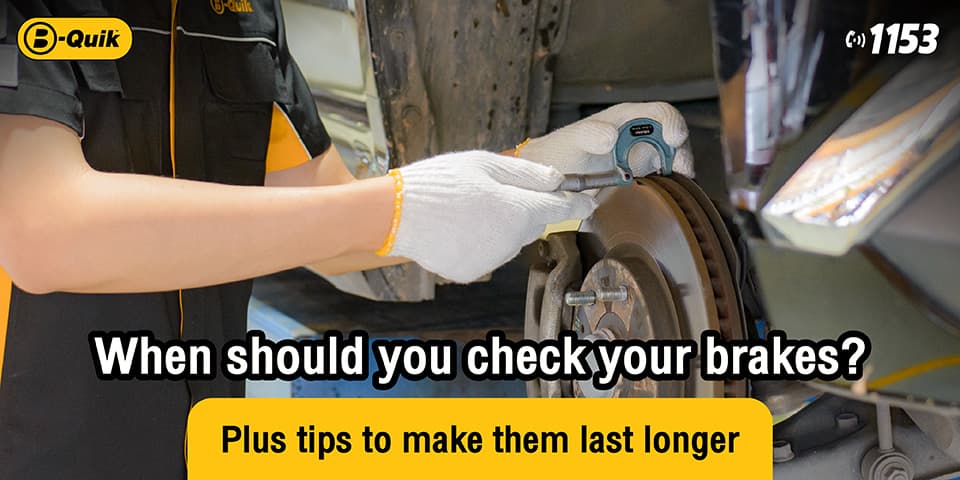
When Should You Check Your Brakes? Tips for Safe and Long-Lasting Brake Performance
The braking system is one of the most important safety systems in a car because it is responsible for slowing down and stopping the vehicle in all situations. If the braking system deteriorates, stopping distances may increase, the risk of accidents may rise, and repair costs may become higher than necessary.
Warning Signs That Your Braking System Needs Immediate Inspection
If you notice any of the following symptoms, you should have your car inspected immediately.
- Unusual braking noises
- Vibrations when applying the brakes
- The car pulling to one side when braking
- A brake pedal that feels unusually soft or hard
- Longer stopping distances than normal
- The brake warning light appearing on the dashboard
Detecting problems early can help reduce repair costs and improve driving safety.
Regular brake maintenance is something every driver should prioritize. You can start with these 4 simple steps.
1. Replace Brake Fluid at the Recommended Intervals
Brake fluid transfers pressure from the brake pedal to the braking system. Over time, brake fluid absorbs moisture, which reduces braking performance and may cause corrosion inside the system.
It is recommended that you replace brake fluid at least once a year or approximately every 25,000 kilometers, or follow the vehicle manufacturer's recommended service intervals to ensure optimal braking performance.
2. Clean the Braking System Regularly
Dust, brake dust, and dirt that accumulate around the brake pads and discs may reduce braking performance and cause components to wear out faster than normal.
Regularly cleaning the braking system helps brake pads, brake discs, and other components function effectively while extending the lifespan of the braking system.
3. Replace Brake Pads When Necessary
Brake pads wear down with use. If they become too thin, they may damage the brake discs and increase stopping distances.
In general, if the brake pad thickness falls below 3 millimeters, the pads should be replaced immediately to maintain braking performance and driving safety.
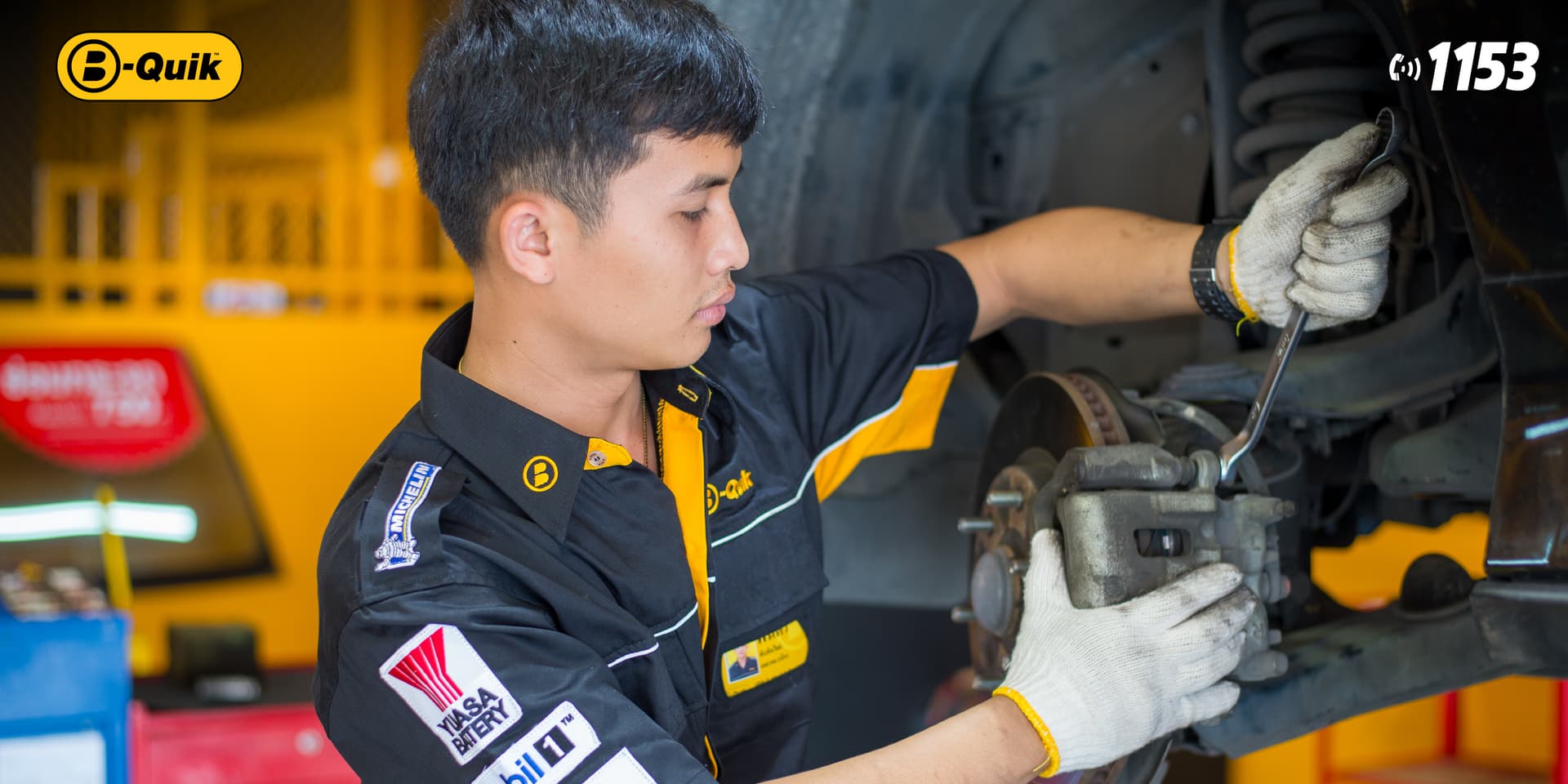
4. Inspect the Brake Discs Regularly
Brake discs should have a smooth surface and be in good condition. If you notice deep grooves, cracks, or warping, have them inspected by a technician.
If the brake discs have only minor wear, resurfacing may be possible to restore a smooth surface. However, if they are excessively worn or warped beyond the manufacturer's specifications, they should be replaced to ensure safety.
Have Your Braking System Inspected at a Reliable Service Center
Regular brake maintenance not only helps extend the lifespan of brake pads, brake discs, and brake fluid but also gives you greater confidence every time you travel.
When your car is due for a brake inspection or component replacement, visit a B-Quik service center. Services include brake inspections, brake pad replacement, brake fluid replacement, and professional braking system maintenance by qualified technicians, along with expert advice to help keep your car safe on every journey.
FAQ Section
Q: At what thickness should brake pads be replaced?
A: When brake pad thickness falls below 3 millimeters, the pads should be replaced immediately to prevent damage to the brake discs and maintain effective stopping performance.
Q: Can brake discs be resurfaced?
A: If the brake discs remain within the manufacturer's thickness specifications and have no cracks, their surfaces can be resurfaced. However, discs that are warped or excessively worn should be replaced.
Q: What symptoms indicate a problem with the braking system?
A: Symptoms include unusual braking noises, vibrations when braking, the car pulling to one side, an abnormal brake pedal feel, or the brake warning light appearing on the dashboard. You should have your car inspected as soon as possible.
Q: How often should you have your braking system inspected?
A: You should have the braking system inspected during every scheduled service or before a long-distance trip to ensure that it is functioning properly and safely.
Share:


