

July 29, 2026
What Are the Warning Signs It's Time to Change Your Engine Oil? Check Before Your Engine Breaks Down

Why Do You Need to Change Engine Oil on Schedule?
Engine oil is the heart of the engine system — it lubricates, reduces friction, dissipates heat, and helps protect internal components from wear.
Even with a high-quality engine oil, its performance gradually declines with use over time. If left unaddressed, this can cause the engine to work harder, consume more fuel, and eventually suffer damage.
In addition to changing engine oil on the manufacturer's recommended schedule, car owners can also watch for unusual symptoms in their vehicle — warning signs that it's time for an oil change.
1. Unusual Engine Noise
If you hear louder-than-normal noise from the engine bay, such as metal-on-metal friction or a rough-sounding engine, it could be due to degraded or insufficient engine oil.
When the lubrication system isn't working at full effectiveness, internal engine components experience more friction, causing the engine to wear out faster than normal.
If you notice this symptom, have your car inspected right away.
2. Reduced Acceleration, Sluggish Performance
When you feel the car isn't accelerating well, the engine responds more slowly than before, or engine power keeps declining, it may be the result of engine oil that's lost its effectiveness.
Deteriorated engine oil can't lubricate internal components properly, causing the engine to work harder and lose power.
3. Engine Oil Is Unusually Black or Thick
New engine oil is amber-colored and clear.
As it's used, engine oil gradually accumulates soot, dust, and metal particles, causing it to darken — this is normal.
However, if the oil is very dark black, unusually thick, or contains a lot of sediment, it means the oil has deteriorated and should be changed immediately.
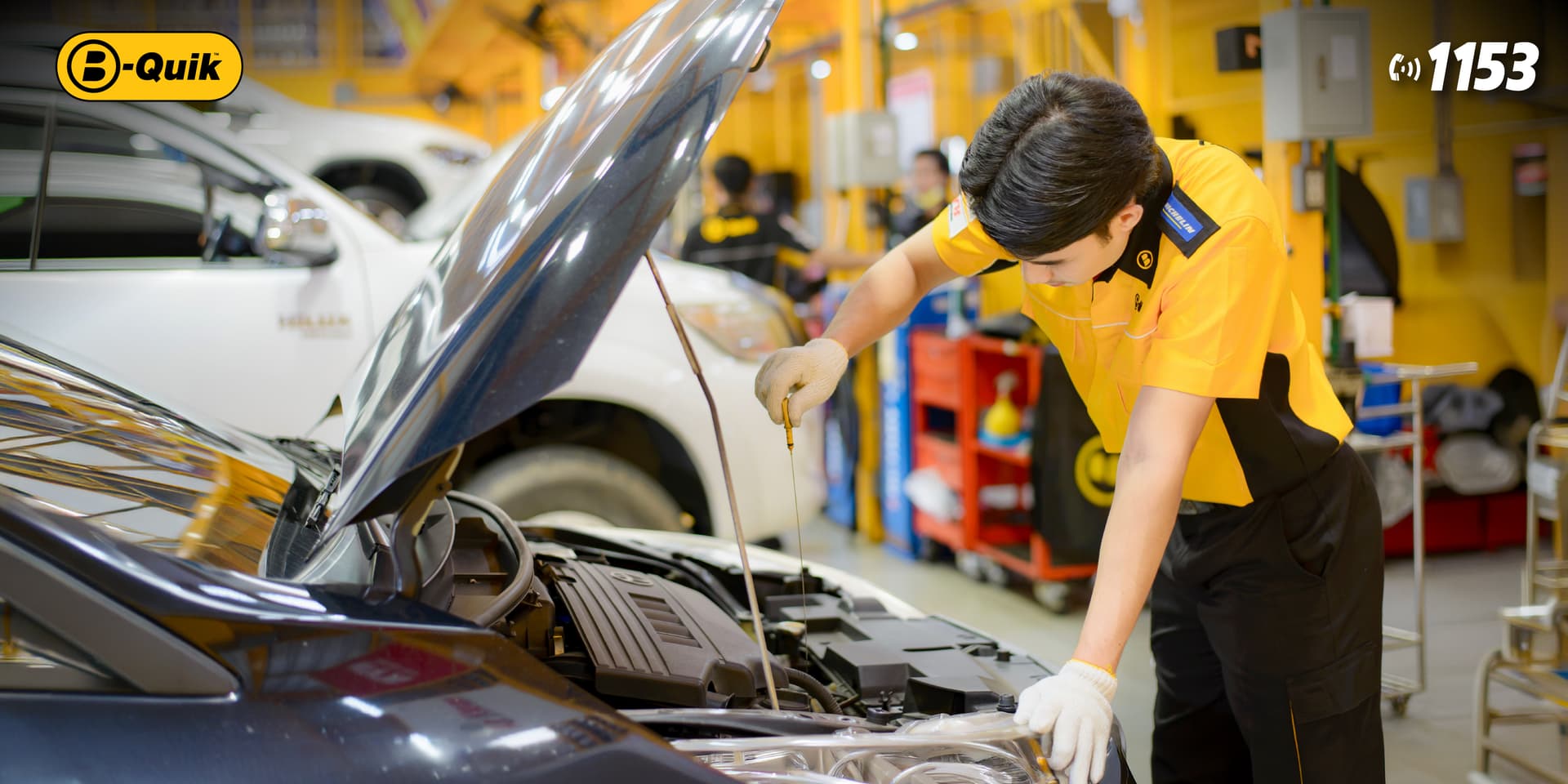
Regularly checking the oil dipstick makes it easier to know the condition of your engine oil.
4. Increased Fuel Consumption
If you notice your car is using more fuel despite driving the same way as usual, it may be because the engine oil has deteriorated.
As engine oil becomes more viscous, its flow decreases, forcing the engine to work harder. This results in higher fuel consumption and increased engine wear over the long run.
Don't Wait for Symptoms — Change Your Engine Oil on Schedule
Even if your car shows no unusual symptoms, changing your engine oil on schedule is still the best way to take care of your engine.
You should change it according to the mileage or time interval set by the manufacturer, replacing the oil filter every time, so the lubrication system can work at full effectiveness.
If you're looking for an "engine oil change near me," a "car oil change shop near me," or an oil-change service center, B-Quik is ready to help with a team of expert technicians. You can check engine oil prices, choose the oil that suits your car, and get expert advice at branches nationwide.
FAQ Section
What signs indicate that you should change your engine oil?
Common signs include unusual engine noise, reduced acceleration, engine oil that's black or unusually thick, and increased fuel consumption.
Does black engine oil mean you need to change it right away?
Engine oil naturally darkens with use, but if it's very black, thick, or contains a lot of sediment, you should get it inspected and changed.
Does deteriorated engine oil affect acceleration?
Yes, it does — deteriorated engine oil can't lubricate the engine at full effectiveness, causing the engine to work harder and acceleration to decline.
If your car is using more fuel, could it be related to the engine oil?
It could be — deteriorated engine oil forces the engine to work harder, resulting in higher-than-normal fuel consumption.
Should you only change engine oil when symptoms appear?
No, you shouldn't. You should change engine oil according to the mileage or time interval set by the manufacturer, even if the car shows no unusual symptoms.
Share:


