

July 29, 2026
What Happens If You Don't Change Your Engine Oil on Time? Consequences Car Owners Shouldn't Ignore

Why do you need to change engine oil on time?
Engine oil lubricates, reduces friction, dissipates heat, and protects internal engine parts from wear. But over time, engine oil gradually degrades, even if the car hasn't reached the specified mileage.
Neglecting to change your engine oil on schedule, or letting it exceed its usable life, can damage your engine and increase long-term maintenance costs.
Let's look at what can go wrong if you don't change your engine oil as scheduled.
1. Sluggish engine, reduced acceleration
As engine oil degrades, its lubrication performance drops, forcing the engine to work harder.
Noticeable effects include:
- The car doesn't accelerate as expected
- Slower engine response
- Reduced driving performance
Changing the engine oil on schedule helps restore the engine to full performance.
2. Faster wear on engine parts
Every time the engine runs, friction occurs between metal parts.
If the engine oil has lost its effectiveness, it can no longer form a proper oil film to prevent friction as well as before, resulting in:
- Faster engine wear
- Shorter engine lifespan
- Increased risk of damage to internal parts
3. Higher fuel consumption
Degraded engine oil becomes thicker and doesn't flow as well, forcing the engine to use more energy to operate.
The results include:
- Increased fuel consumption
- A louder engine
- Less smooth driving
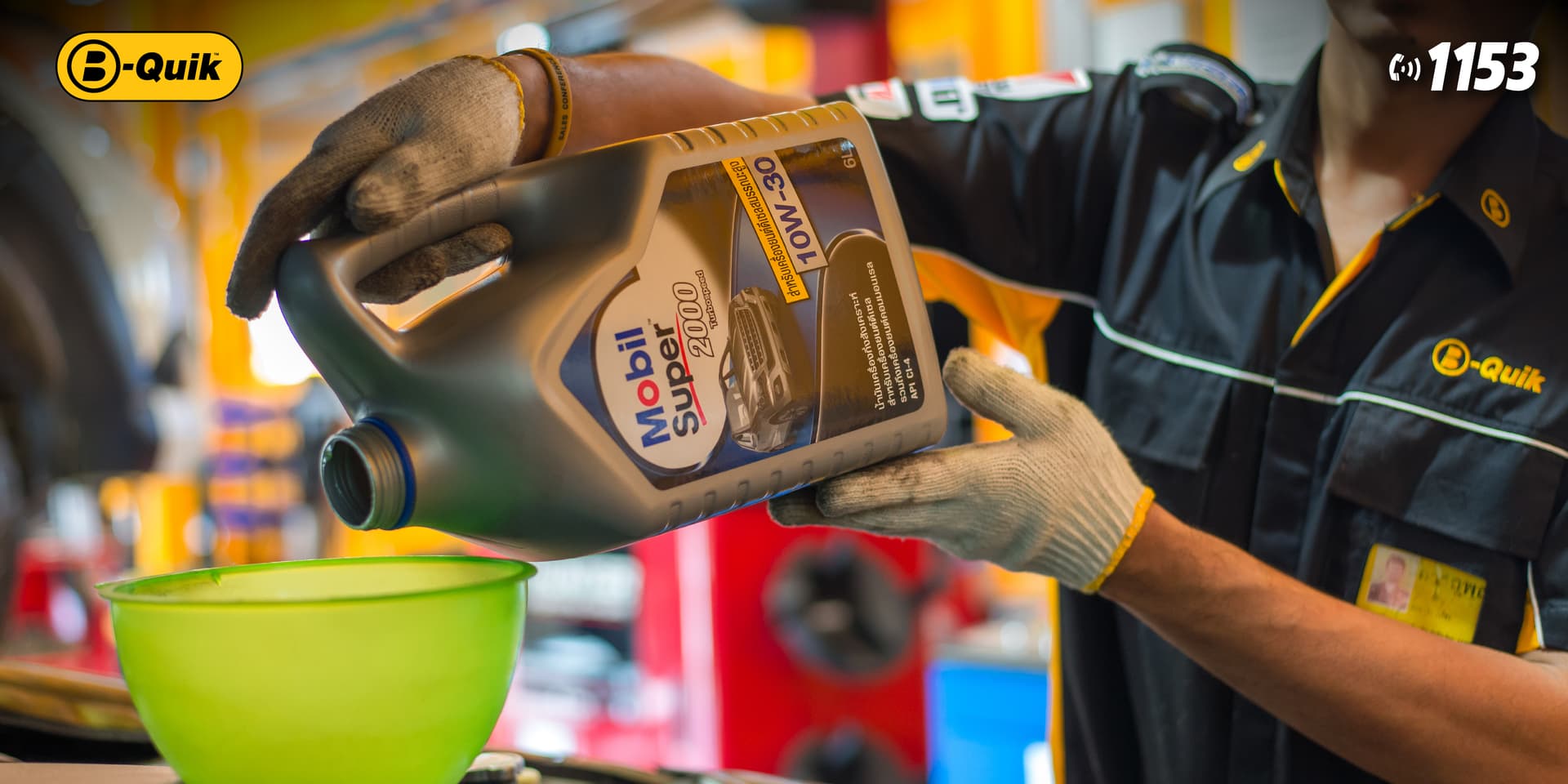
4. Increased engine emissions
When engine oil can no longer perform at full efficiency, the engine works harder and combustion may become incomplete.
This can lead to:
- More black smoke
- Increased air pollution
- Long-term effects on engine performance
Changing your engine oil on schedule is one way to help reduce environmental impact.
5. Repair costs many times higher than an oil change
Neglecting engine oil changes can lead to accumulated damage inside the engine, with repair costs far exceeding the cost of routine maintenance.
Regularly changing the engine oil along with the filter is a worthwhile investment that reduces the risk of major repairs and extends the engine's lifespan.
Change your engine oil and filter on schedule for an engine that's always ready
Whether you use conventional, semi-synthetic, or fully synthetic engine oil, you should change it according to the mileage or time interval specified by the manufacturer, and replace the oil filter every time, to keep the lubrication system working at full efficiency.
If you're looking for an engine oil change near me, a car oil change shop near me, or an oil change center, B-Quik is ready to serve you with a team of expert technicians. You can check engine oil prices, choose the right engine oil for your car, and get expert advice at branches nationwide.
What happens if you don't change your engine oil on time?
The engine oil will degrade, reducing its lubrication performance, causing the engine to wear and work harder, which can lead to costly damage.
Does degraded engine oil affect acceleration?
Yes, because the engine can't run at full efficiency, causing the car to accelerate slower and respond less well than before.
Does not changing engine oil really increase fuel consumption?
Yes. When engine oil degrades, the engine has to work harder, resulting in higher-than-normal fuel consumption.
Should you replace the oil filter at the same time?
Yes, you should replace it every time you change the engine oil, to prevent dirt from recirculating back into the engine and keep the lubrication system running at full efficiency.
Should you change engine oil based on mileage or time?
You should follow both the mileage and time interval recommended by the vehicle manufacturer, changing whichever comes first.
Share:


