
July 29, 2026
Does Wheel Alignment Really Save Fuel? Check This Before Your Car Guzzles Gas and Your Tires Wear Out

If you feel like your car is guzzling more fuel, the steering wheel isn't straight, or your tires are wearing out faster than usual, the cause may not be the engine alone.
One factor many people overlook is wheel alignment.
When the wheel alignment is out of position, the car may experience more rolling resistance, forcing the engine to work harder, which affects fuel consumption and also causes uneven, faster tire wear.
Regularly checking and adjusting wheel alignment isn't just about handling — it also helps reduce long-term maintenance costs.
What Is Wheel Alignment, and How Is It Related to Fuel Efficiency?
Many people have heard the term "wheel alignment" but aren't quite sure what it means.
Wheel alignment is the process of adjusting the angles of the wheels in relation to the steering system, suspension system, and the car's direction of travel, so that all wheels make proper contact with the road.
When the alignment is set correctly, the car drives straight, handles easily, and the tires wear evenly.
Conversely, if the wheels are misaligned, the tires experience more friction with the road than normal.
The results are:
- The car doesn't drive straight
- Faster tire wear
- The engine needs to work harder
- Increased fuel consumption
Correct wheel alignment allows the car to move efficiently and reduces unnecessary energy loss.
Can Poor Fuel Economy and Fast Tire Wear Really Be Caused by Misaligned Wheels?
Many people wonder whether poor fuel economy or fast tire wear is related to wheel alignment.
The answer is: it's possible.
When the wheel alignment is off, the tires don't make even contact with the road, creating more resistance than normal.
The engine then has to work harder to maintain driving speed.
In addition, certain areas of the tire may wear abnormally fast, shortening its usable life.
Common warning signs include:
- Higher-than-normal fuel consumption
- Uneven wear on the inner or outer edge of the tire
- Tires wearing out faster than their normal lifespan
- The car pulling left or right
- The steering wheel not centered while driving straight
Leaving misalignment unaddressed for a long time can lead to needing to replace tires earlier than scheduled, adding unnecessary costs.
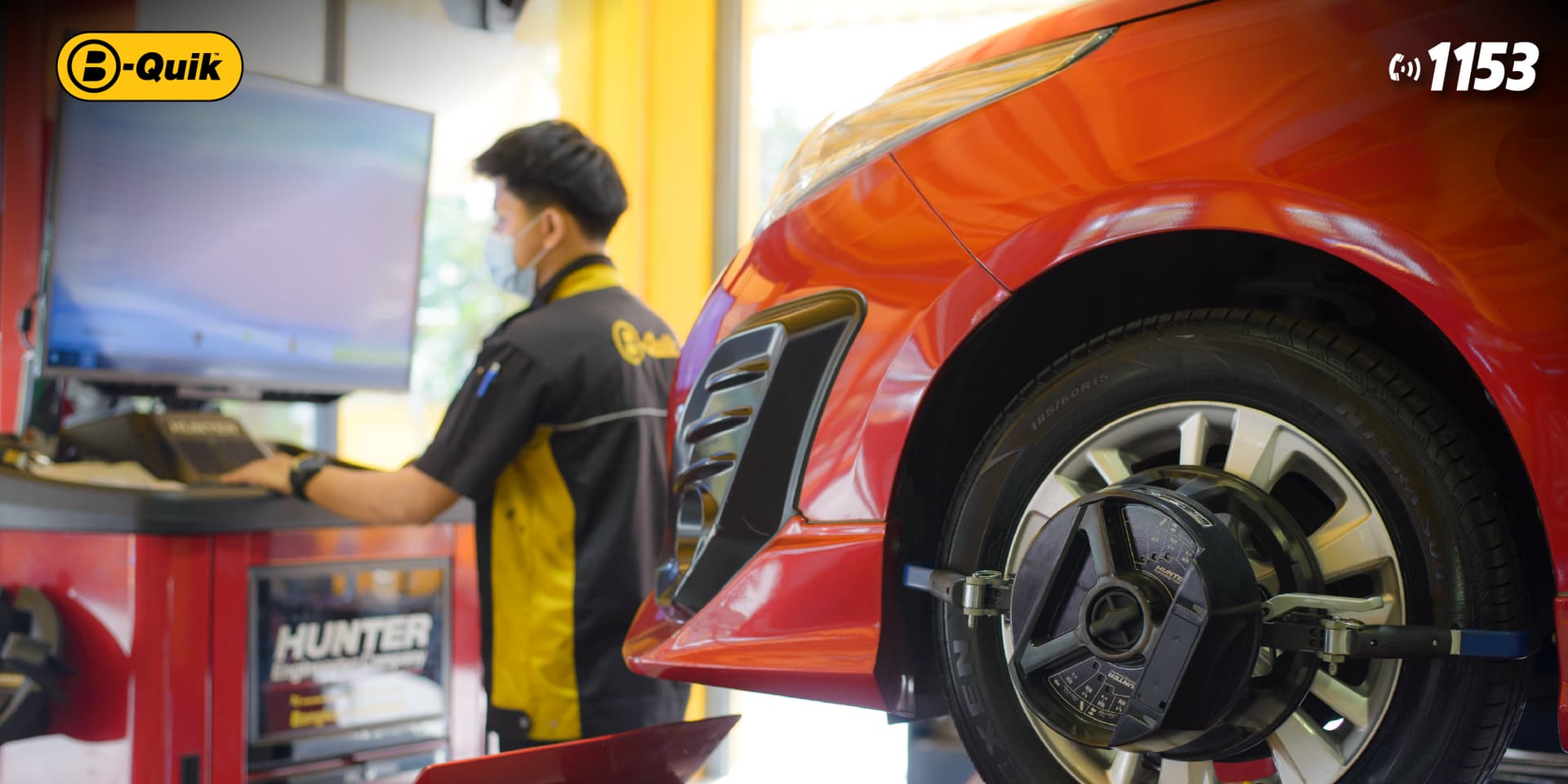
When Should You Get a Wheel Alignment? Check for These Symptoms
Even if your car still drives normally, that doesn't necessarily mean the wheel alignment is perfect.
If you notice any of the following symptoms, have your car inspected right away:
- The steering wheel is tilted while driving straight
- The car pulls to the left or right
- Uneven tire wear
- The car becomes harder to control at high speed
- The car feels less stable than before
You should also check the wheel alignment after:
- Fitting new tires
- Rotating tires
- Replacing suspension components
- Hitting a pothole or a severe impact
- Repairing the steering system
Checking as soon as symptoms appear helps reduce potential damage to the tires and suspension system.
Why Should You Have Wheel Alignment Checked by a Professional?
Wheel alignment problems don't only affect the tires.
In many cases, the root cause may be worn suspension components or a steering system that's starting to wear out.
Checking with specialized equipment allows for a precise analysis of the wheel angles and helps identify the true cause of the problem.
It also helps prevent addressing only the symptom — such as replacing tires — when the real cause is misalignment or a suspension issue.
Getting a Wheel Alignment When You Notice Warning Signs Can Help Reduce Fuel Consumption and Premature Tire Wear
If you're asking whether wheel alignment really saves fuel,
the answer is: wheel alignment won't produce dramatic, immediate fuel savings, but it helps the wheels and tires work efficiently, reduces unnecessary resistance, and lowers the chance of your car consuming more fuel than it should. It also helps:
- Even tire wear
- Better handling
- Reduced strain on the suspension system
- Longer tire life
- Lower long-term maintenance costs
For drivers, checking and adjusting wheel alignment as needed, along with regularly maintaining the wheels and tires, is another way to improve safety and maintain driving performance over the long term. Wheel alignment may seem like a small detail many people overlook, but it can help reduce the chances of fast tire wear, poor fuel economy, and unnecessary costs down the road.
Share: