

July 29, 2026
Get Your Tires Ready Before the Rainy Season: What to Check? 5 Key Points You Shouldn't Overlook
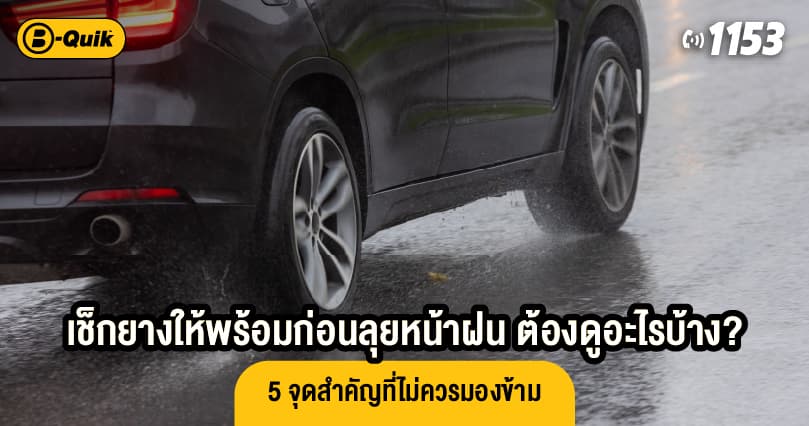
As the rainy season arrives, road conditions become riskier than usual — wet roads, standing water, and reduced visibility are all more common.
One thing that directly affects driving safety is your car tires, since the tires are the only point of contact between the car and the road, responsible for grip, water dispersal, and effective vehicle control. If the tires are not in good condition, the risk of skidding, brake failure, or hydroplaning increases. Therefore, before the rainy season begins, you should get your tires ready, especially checking these 5 key points.
Why Is Checking Tire Tread Important Before the Rainy Season?
The tire tread is responsible for channeling water away from the tire surface while driving on wet roads. When the tread has sufficient depth, water is efficiently drained from the contact area between the tire and the road. But if the tread is worn down too much, its ability to disperse water decreases, increasing the chance of hydroplaning, which can cause a momentary loss of vehicle control. Things to check include:
- Whether the tread is worn down close to the tread wear indicator
- Whether the tread is worn unevenly
- Whether there are cracks or damage on the tire surface
Healthy tire tread is the most important factor for driving on wet roads and during heavy rain.
Why Check Wheel Alignment Before the Rainy Season?
Many people focus on tire tread but overlook wheel alignment. In reality, correct wheel alignment allows the tire surface to make full contact with the road.
If the wheels are misaligned, the tires may wear faster than normal and wear unevenly on each side. Besides shortening tire life, this also affects road grip, especially during the rainy season when tires need to perform at their best. Signs that indicate you should check wheel alignment include:
- The car pulls to the left or right
- The steering wheel is off-center
- Tires wear unevenly on one side
- The car becomes harder to control at high speed
Proper wheel alignment allows the tires to make full contact with the road, boosting your confidence when driving in the rainy season.
Should You Rotate Your Tires Before the Rainy Season?
The answer is yes.
This is because each tire position wears differently. In front-wheel-drive cars in particular, the front tires tend to wear faster than the rear ones. Rotating the tires at the appropriate interval helps ensure that the tread wears evenly across all four tires. Benefits of tire rotation include:
- Helps extend tire life
- Improves balance in road grip
- Reduces the chance of abnormal tire wear
- Helps improve vehicle control
Generally, it is recommended to rotate tires every 10,000 km, or according to the car manufacturer's recommendation. Evenly worn tires perform more effectively when driving on wet roads.

How Does Tire Pressure Affect Driving in the Rain?
Besides tread, tire pressure is another important factor that should not be overlooked. Correct tire pressure allows the tire surface to make proper contact with the road. If the pressure is too low, tires may wear faster and generate more heat while driving. On the other hand, if the pressure is too high, it can reduce the contact area with the road and affect grip. Best practices include:
- Check tire pressure at least once a month
- Check before a long trip
- Inflate to the pressure specified by the car manufacturer
- Check the spare tire pressure as well
Correct tire pressure allows the tires to perform at full efficiency, both in terms of grip and water dispersal.
Is Tire Age More Important Than Many People Think?
Many car owners focus on tread but forget to check the age of their tires. Even if tread remains, as tires age the rubber naturally deteriorates. This results in reduced flexibility, and grip performance may not be as good as before. Generally, car tires have a lifespan of about 4–5 years, depending on usage, storage, and environmental conditions. Additional signs to check include:
- Rubber becoming hard
- Cracking on the surface
- Deterioration from heat or sunlight
Tires that are old, even if the tread remains, should still be regularly inspected by an expert.
Where Should You Get Your Tires Checked Before the Rainy Season?
Checking your tires yourself is a good starting point. However, in many cases, certain issues — such as abnormal tire wear, wheel alignment, or suspension condition — cannot be detected with the naked eye. Getting a professional tire inspection helps you understand the true condition of your tires and plan proper maintenance, especially before the rainy season, when tires have to work harder than usual. For everyday drivers, checking tire condition, wheel alignment, and overall tire readiness before a trip is one of the most effective ways to increase driving safety.
5 Tire Checks Before the Rainy Season for Confidence on Every Trip
If you're wondering what to check on your tires before the rainy season, the answer is:
- Tire tread
- Wheel alignment
- Tire rotation
- Tire pressure
- Tire age
All 5 of these factors directly affect road grip, water dispersal, and vehicle control on wet roads. Getting your tires ready before the rainy season not only extends tire life but also boosts safety for drivers and passengers on every journey.
Share:


