

August 28, 2026
What Do the Numbers and Symbols on Your Tire Sidewall Mean? How to Read Them
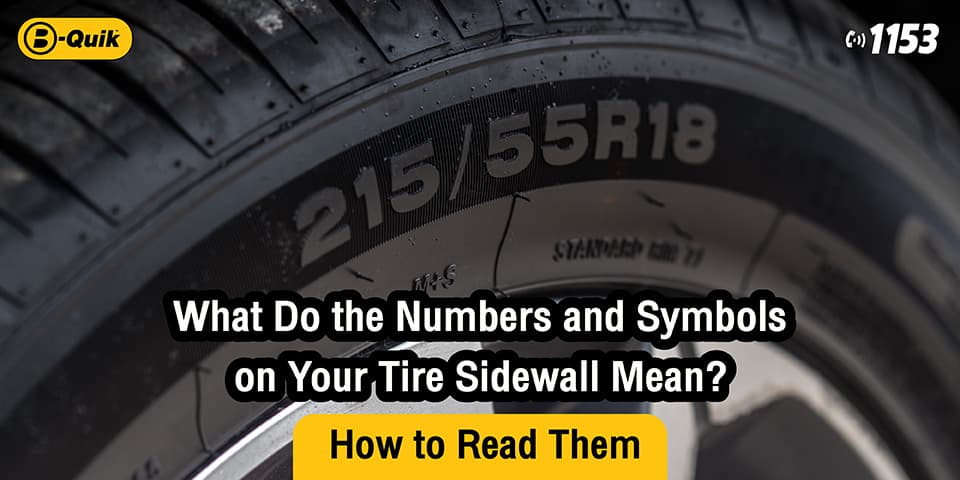
What Do the Numbers and Symbols on a Tire Sidewall Mean? How Can You Read Them?
Have you ever noticed that, besides the tire brand and model, a car tire's sidewall also displays several sets of numbers and letters, such as 215/70 R15, along with other numbers and letters that may appear afterward?
These codes are not simply numbers used to identify a tire model. They provide important information about tire size, tire construction, wheel diameter, load capacity, speed rating, and tire manufacturing date.
Understanding the numbers and symbols on a tire sidewall helps drivers check tire specifications and choose tires that are suitable for their vehicles and driving needs.
1. Tire Width
The first number on the tire sidewall indicates the tire's width in millimeters.
For example, consider a tire with the size 215/70 R15.
The number 215 means that the tire has a nominal width of 215 millimeters.
2. Tire Sidewall Height or Aspect Ratio
The number following the tire width indicates the sidewall height as a percentage of the tire's width. This is known as the aspect ratio.
For a tire with the size 215/70 R15:
The number 70 means that the sidewall height is 70% of the tire's width.
To calculate the approximate sidewall height, you can use the following formula:
Tire width × (Aspect ratio ÷ 100) = Sidewall height
For example:
215 × 70 ÷ 100 = 150.5 millimeters
Therefore, a tire with the size 215/70 has an approximate sidewall height of 150.5 millimeters.
3. Tire Construction
After the numbers indicating tire width and sidewall height, you will find a letter that identifies the tire's construction.
One of the most common letters is R, which stands for Radial, indicating a radial tire construction.
Radial tires feature an internal structure consisting of cord layers and reinforcing materials beneath the tread. This construction helps provide flexibility and stability while driving.
Therefore, in the code 215/70 R15, the letter R indicates radial tire construction.
4. Wheel Diameter
The number following the letter R indicates the wheel rim diameter in inches.
Using the example 215/70 R15:
The number 15 means that the tire is designed to fit a wheel rim with a diameter of 15 inches.

5. Tire Load Index
The tire sidewall may display another set of numbers after the tire size information. This is known as the Load Index.
The load index indicates the maximum load that a single tire can support under the conditions specified by the manufacturer. Each index value corresponds to a different load-carrying capacity.
When replacing tires, you should choose tires with a load index suitable for your vehicle and one that is not lower than the value specified by the vehicle manufacturer. This helps ensure that the tires can adequately support the vehicle's weight.
6. Tire Speed Rating
After the load index, you will find a letter known as the Speed Rating. It indicates the maximum speed a tire is designed to sustain under specified conditions.
For example, W indicates a tire speed rating corresponding to a maximum speed of 270 kilometers per hour.
However, the speed rating does not mean that you should drive at such high speeds. It is a technical specification of the tire. When replacing tires, you should choose a speed rating that meets the vehicle manufacturer's requirements and is not lower than the original specification.
7. How Can You Read the Tire Manufacturing Date from the DOT Code?
The DOT code is another important piece of information to check on the tire sidewall. The last four digits of the DOT code indicate the week and year the tire was manufactured.
For example, if the last four digits are 2420:
24 indicates the 24th week
20 indicates the year 2020
Therefore, the code 2420 means that the tire was manufactured in the 24th week of 2020.
Checking the tire's manufacturing date is important because tires can deteriorate over time due to age and environmental conditions, even if they have not been used extensively.
Understanding Tire Sidewall Markings Helps You Choose the Right Tires
The numbers and symbols on a tire sidewall are important information that drivers should not overlook. They provide essential details about the tire, including width, sidewall height, construction, wheel diameter, load index, speed rating, and manufacturing date.
Before replacing your car tires, check the information on your existing tire sidewalls and compare it with the specifications set by the vehicle manufacturer. This helps ensure that you choose tires with the appropriate size and characteristics for your vehicle and driving needs.
If you are unsure which tire size is suitable for your vehicle, you can consult a professional technician for assistance in checking your vehicle's specifications and recommending appropriate tires.
FAQ Section
Q: What does 215/70 R15 mean on a tire sidewall?
A: 215 indicates a tire width of 215 millimeters, 70 means the sidewall height is 70% of the tire width, R indicates radial tire construction, and 15 refers to a wheel rim diameter of 15 inches.
Q: What does the letter R mean on a tire sidewall?
A: R stands for Radial, indicating a tire with an internal radial construction. This is one of the most common tire constructions used in passenger vehicles.
Q: What is the DOT code used for?
A: The last four digits of the DOT code indicate the week and year the tire was manufactured. For example, 2420 means the tire was manufactured in the 24th week of 2020.
Q: What is a tire load index?
A: The load index indicates the maximum load a single tire can support under the conditions specified by the manufacturer. You should choose a tire with a load index suitable for your vehicle and one that is not lower than the value specified by the vehicle manufacturer.
Q: Why is a tire speed rating important?
A: The speed rating is a letter that indicates the maximum speed a tire is designed to sustain under specified conditions. When replacing tires, you should choose a speed rating that meets the vehicle manufacturer's recommendations.
Share:


