

August 28, 2026
What Are Run-Flat Tires? What Are Their Benefits and What Should You Know Before Using Them?
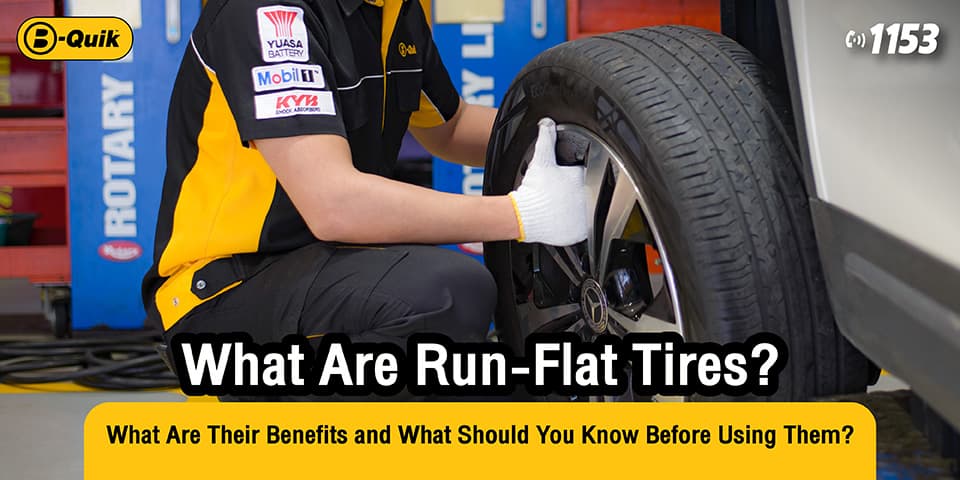
What Are Run-Flat Tires? What Are Their Benefits and What Should You Know Before Using Them?
Run-flat tires are a type of tire technology designed to allow a vehicle to continue driving temporarily, even after the tires lose air pressure due to a puncture or leak. Their sidewalls are specially reinforced to support the vehicle's weight and reduce the risk of the tire coming off the wheel rim when air pressure is lost.
Run-flat technology began appearing in certain vehicles in the 1980s. Today, some vehicle models, such as BMW and MINI, come equipped with run-flat tires as standard equipment from the factory.
When a tire loses pressure, the vehicle's TPMS (Tire Pressure Monitoring System) alerts the driver, allowing them to reduce speed and take the vehicle for inspection or tire replacement safely.
How Are Run-Flat Tires Different from Conventional Tires?
When conventional tires lose air pressure, they can no longer support the vehicle's weight properly. Continuing to drive may cause the sidewalls to flex excessively and become damaged, potentially making the tires unusable.
In contrast, run-flat tires feature reinforced sidewalls that can support the vehicle's weight even without air pressure. This allows drivers to maintain control of the vehicle and continue driving for a limited distance to reach a safe location or service center.
However, the distance and speed at which you can continue driving after losing tire pressure depend on the specifications of the tire and vehicle manufacturers. In some cases, the maximum permitted speed is approximately 80 kilometers per hour. Therefore, you should consult your vehicle's owner's manual and the manufacturer's recommendations before use.
What Are the Benefits of Run-Flat Tires?
1. Improved Safety When Tires Lose Air Pressure
If a tire becomes punctured or goes flat, drivers can still maintain control of the vehicle and continue driving within the specified limits. This helps reduce the risks associated with having to stop and change a tire in an unsafe location.
2. No Need to Replace the Tire Immediately
Run-flat tires allow drivers to continue driving to a safe location or service center, making them more convenient than conventional tires, which may require an immediate stop to install a spare tire.
3. Helps Maintain Vehicle Control
The reinforced sidewall structure helps the tire maintain its shape when air pressure is lost, reducing tire deformation and helping drivers maintain better control of the vehicle.

How Can You Tell If a Tire Is a Run-Flat Tire?
You can identify run-flat tires by checking the lettering or symbols on the tire sidewall. Different manufacturers may use different designations, such as:
- RSC – Run Flat System Component
- RFT – Bridgestone's Run-flat Technology
- SSR – Continental's Self-Supporting Run-flat Tire
If you want to check whether your vehicle is equipped with run-flat tires, inspect the markings on the tire sidewall and verify the details directly with the tire manufacturer.
Can Run-Flat Tires Be Used on Conventional Cars?
Run-flat tires are not suitable for every vehicle. Installation requires consideration of the vehicle's overall system, particularly the suspension and wheels. Because run-flat tires have stiffer sidewalls than conventional tires, they may affect suspension performance and driving comfort.
Some vehicles are specifically designed with suspension systems and other control systems that work with run-flat tires. Therefore, you should not switch from conventional tires to run-flat tires without first checking whether they are suitable for your vehicle.
If you want to switch to run-flat tires, check your vehicle's specifications, tire size, wheels, TPMS, and the vehicle manufacturer's recommendations to ensure that the tires and vehicle systems can work together properly.
Run-flat tires are another technology that can improve convenience and safety when a tire is punctured or loses air pressure. However, choosing the right tires requires consideration of your vehicle model and compliance with the specified speed and distance limits after pressure loss.
FAQ Section
Q: What are run-flat tires?
A: Run-flat tires are designed to support a vehicle's weight and allow it to continue driving for a limited distance, even after losing air pressure due to a puncture or flat tire. They feature specially reinforced sidewalls.
Q: How far can you drive on run-flat tires after a puncture?
A: The permitted distance and speed depend on the specifications of the tire and vehicle manufacturers. Some models allow you to continue driving at a maximum speed of approximately 80 kilometers per hour after losing air pressure. Always refer to your vehicle's owner's manual for guidance.
Q: What are the benefits of run-flat tires?
A: Run-flat tires allow drivers to maintain control of the vehicle and reach a safe location or service center after losing tire pressure. This improves convenience and reduces the risks associated with changing a tire on the roadside.
Q: Can run-flat tires be used on conventional cars?
A: You should not switch to run-flat tires without first checking their suitability for your vehicle. Their stiffer construction may affect the suspension and vehicle handling. Always check the vehicle manufacturer's recommendations before installation.
Q: How can you identify run-flat tires?
A: You can check the markings on the tire sidewall, such as RSC, RFT, or SSR. The designation varies depending on the tire manufacturer.
Share:


