

August 26, 2026
How to Prep Your Car for Rainy Season: 7 Essential Checks Before You Hit the Road | B-Quik
How to Prepare Your Car for the Rainy Season: 7 Essential Things to Check Before Driving
The rainy season is a time when drivers need to take extra precautions. Heavy rain, slippery roads, and flooding can all increase the risk of accidents. In addition to driving carefully, preparing your vehicle before setting off is equally important for staying safe on the road.
Here are 7 essential things to prepare before driving during the rainy season.
1. Always Keep Essential Items in Your Car
You should keep a few useful items in your car in case of an emergency, such as:
- A raincoat or umbrella
- Sandals for walking through water
- Plastic bags for storing wet clothes or shoes
- A phone charging cable and a power bank
These items can help you handle unexpected situations more conveniently.
2. Avoid Driving Through Deep Water
If the water level is higher than the exhaust pipe or too deep to assess safely, avoid driving through it. Water may enter the engine system, causing the engine to stall or potentially resulting in serious damage.
3. Do Not Use Hazard Lights While Driving
Many drivers mistakenly believe that turning on hazard lights during heavy rain improves safety. However, this can confuse other road users because they may be unable to tell whether the vehicle is changing lanes or has stopped due to an emergency. Instead, turn on your headlights and drive at an appropriate speed.
4. Check Your Tires
Tires are the only point of contact between your vehicle and the road. Worn tread or improper tire pressure can reduce traction and increase the risk of aquaplaning, which occurs when a layer of water causes the tires to lose contact with the road surface.
5. Check Your Braking System
Your braking system should always be in good condition, especially during the rainy season when stopping distances may be longer than usual. If you notice any unusual braking symptoms, such as squealing noises, vibrations, or a sinking brake pedal, have your vehicle inspected immediately.
6. Check Your Windshield Wipers
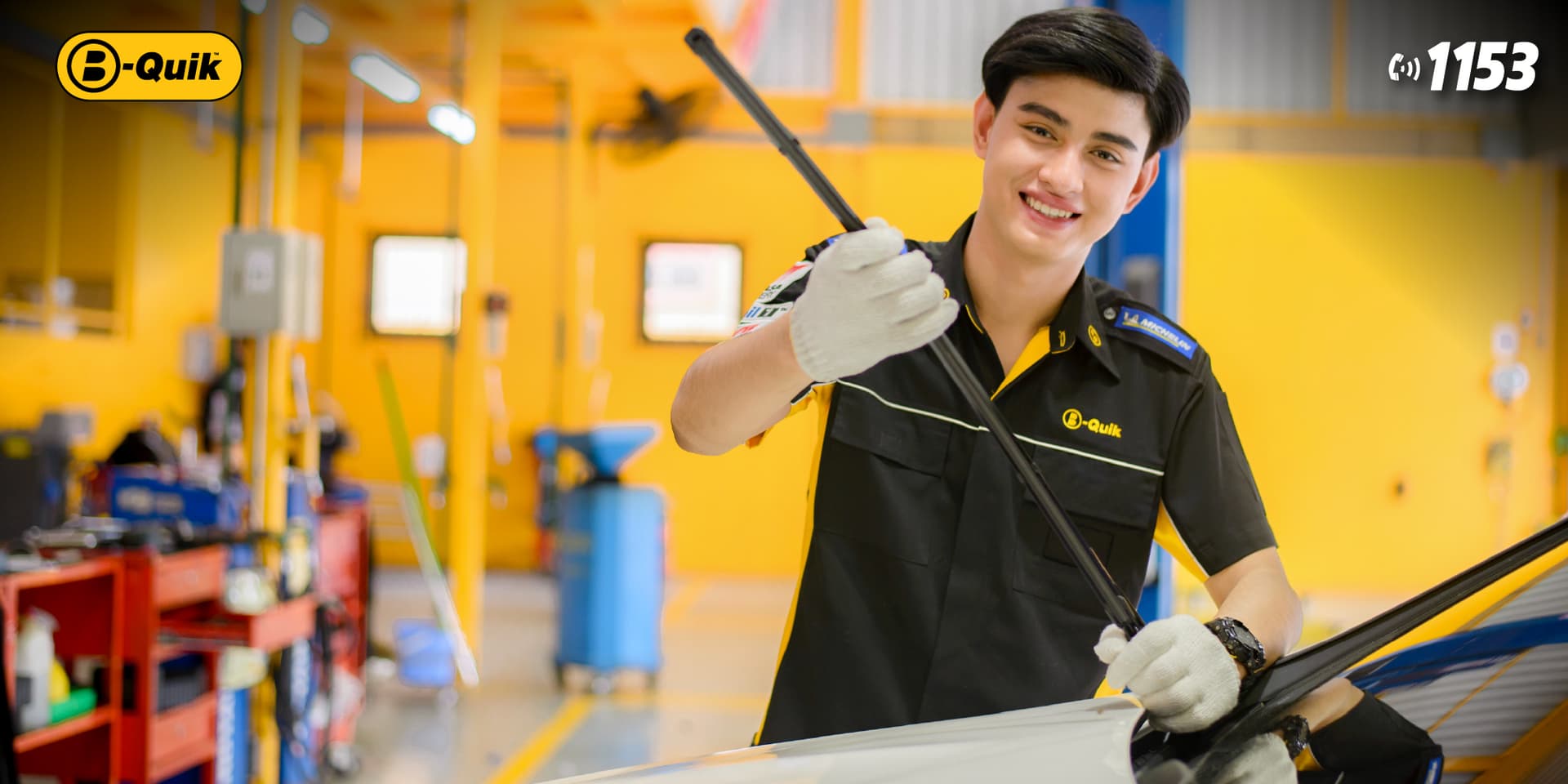
Worn windshield wipers may fail to clear water effectively, leaving streaks or residue on the windshield and reducing visibility. If the wipers make unusual noises, move unevenly, or leave water behind, replace them as soon as possible.
7. Check All Exterior Lights
Before setting off, check that your headlights, taillights, brake lights, and turn signals are all working properly. Visibility decreases during rainy conditions, so functioning lights help you see the road and make your vehicle more visible to other drivers.
Prepare Your Car for Safer Driving Throughout the Rainy Season
Although rain is unavoidable, preparing your vehicle before traveling can significantly reduce the risk of accidents. Regularly inspect your tires, brakes, windshield wipers, lighting system, and essential emergency supplies to help ensure safer and more comfortable journeys throughout the rainy season.
If you need a vehicle inspection before the rainy season begins, you can take your car to any B-Quik service center. Professional technicians are available to provide expert advice and comprehensive vehicle maintenance services.
FAQ Section
Q: What should you check on your car before the rainy season?
A: You should inspect your tires, braking system, windshield wipers, and exterior lights, as well as keep essential emergency supplies in your car to prepare for changing weather conditions.
Q: Why should you avoid using hazard lights while driving in the rain?
A: Hazard lights can confuse other road users and make it difficult to recognize your turn signals. Instead, turn on your headlights and drive at an appropriate speed.
Q: What are the risks of driving through deep water?
A: If the water is too deep, it may enter the engine system, causing the engine to stall or potentially resulting in serious damage.
Q: When should windshield wipers be replaced?
A: In general, windshield wipers should be replaced every 6–12 months or when they no longer clear water effectively, make unusual noises, or move unevenly during operation.
Share:


